
entretien
the messthetics
& james brandon lewis
margin walkers
PROPOS RECUEILLIS PAR guillaume malvoisin,
juillet 2025, crescent festival, mâcon (71)
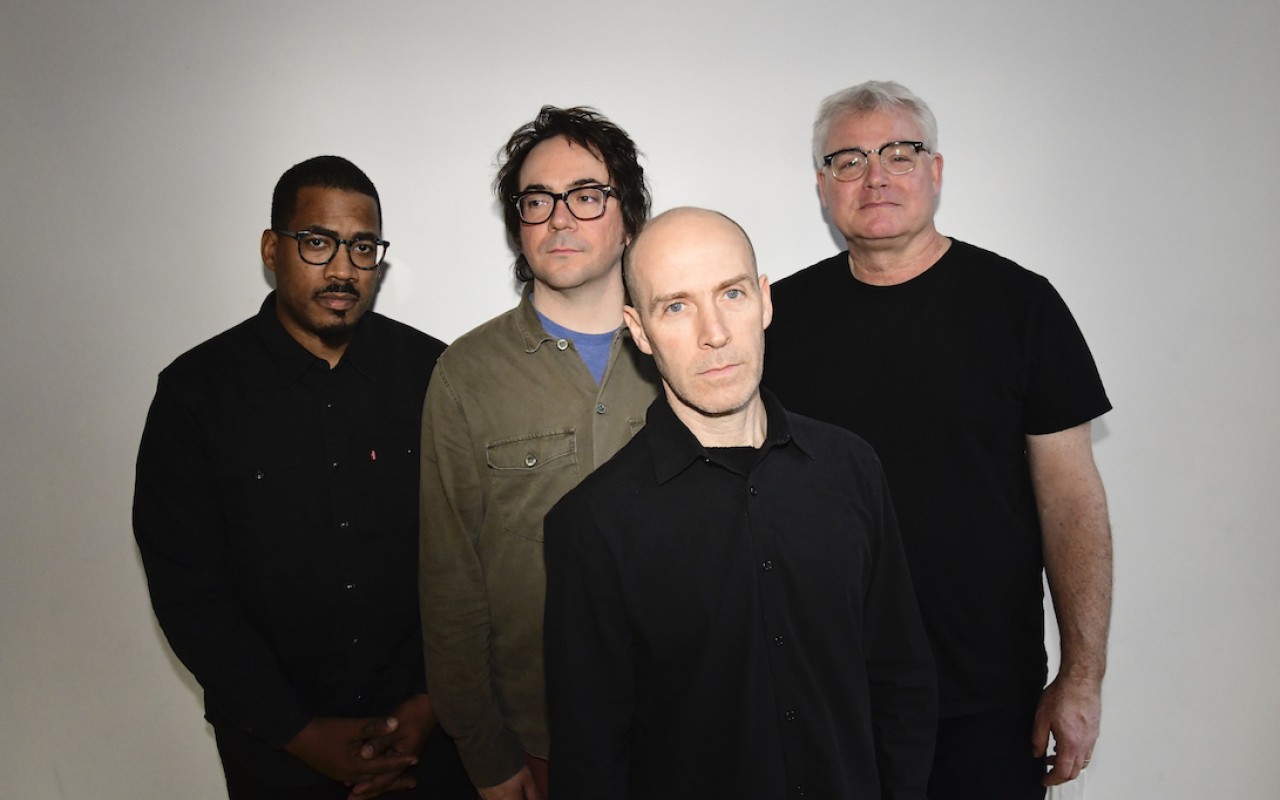
« Maybe not
so concerned
with aesthetic things. »
© Shervin Lainez
retrouvez les infos du concert en cliquant ici
— more details about the concert to be found here
Avant que The Messthetics et James Brandon Lewis ask to the ages les secrets de la musique à plusieurs pour leur date à Sons d’hiver, .pointbreak les a rencontrés en Bourgogne où ils (dé)jouaient leur répertoire habituel au Crescent festival. Lignes esthétiques, puristes du jazz et Panier de basket.
Commençons par une question idiote. Joe, Brendan ? Avez-vous déjà été tentés de demander à James de jouer suspendu à un panier de basket ?
Brendan Canty : C’est une tentation à laquelle nous résistons chaque jour.
James, as-tu déjà eu envie d’essayer cela ?
James Brandon Lewis : Est-ce que cela a eu vraiment lieu ?
Parlez-moi de ce nom, Messthetics. Y’avait-il une envie de créer du désordre ou de semer le chaos quelque part ?
Brendan Canty : Oui, mais ça n’a pas eu lieu dans l’autre sens, quand nous avons essayé de trouver comment appeler le groupe pourrait s’appeler, cela semblait approprié.
James Brandon Lewis : Il est bien raccord désormais.
Le nom semblait correspondre à ce que vous étiez en tant que groupe.
Joe Lally : Je pense que s’il y a quelque chose de propre au groupe, c’est sa capacité à étirer le son et à improviser, donc je dirais que dans une certaine mesure, peut-être. Mais cela n’a jamais été conçu comme un exercice improvisé ou libre. Ça te va comme description ?
Peut-être était-ce une façon de se libérer de toute définition esthétique… Je veux dire, je pense…
Brendan Canty : Je veux dire, je pense…
C’est peut-être une question française…
Joe Lally : Nous avons aussi des questions intellectuelles en Amérique, tu sais.
Brendan Canty : Intellectuelles, oui.
C’est justement ça, c’est exactement la question que je n’ai pas eu le temps de poser.
Joe Lally : Peut-être ne sommes-nous pas tellement préoccupés par la question esthétique.
James Brandon Lewis : Je pense que ce groupe est exactement ce qu’il semble être. Nous jouons beaucoup avec l’idée de la façon dont les choses sont censées être.
Nous parlerons peut-être plus tard de la façon dont les idées peuvent avoir du sens. Mais d’abord, Anthony, j’imagine que tu es l’une des raisons de cette réunion entre James et The Messthetics. Comment vois-tu les choses aujourd’hui et qu’attendais-tu à l’époque ?
Anthony Pirog : J’ai juste pensé dès le début que James serait le partenaire idéal pour nous sur le plan énergétique. Et c’est ce qui s’est passé dès qu’il a commencé à jouer avec nous à New York. Il a en quelque sorte fait passer les choses à un niveau supérieur. Et, comme nous avons joué régulièrement au cours des deux dernières années, le groupe continue à se dépasser et devient de plus en plus… Je ne sais pas… Il est en pleine expansion. C’est vraiment amusant de voir les nouvelles possibilités qu’offre une nouvelle voix.
Let’s begin with some silly question. Joe, Brendan ? Have you ever been tempted to ask James to play while hanging in a basketball hoop ?
Brendan Canty : It’s a temptation that we fight off every day.
James, have you ever wanted to try this ?
James Brandon Lewis : Well, didn’t that really happen ?
Tell me about that name, Messthetics. Was it really the idea of creating mess or chaos somewhere with that name ?
Joe Lally : Well, the name came after the origin of the band. Yeah, so we were… I mean, I think inherent a little bit in the group is the ability to stretch and improvise, and so I’d say to a certain extent, maybe. But it was not ever meant to be a totally improvised or free exercise. How’s that for a description ?
The name seemed to fit what you were as a band.
James Brandon Lewis : It fits now.
Brendan Canty : Yeah, I mean, it didn’t work the other way around, but when we were trying to define what the band could be called, it seemed as suitable.
Maybe, was it some way of breaking free from all aesthetics definitions, or the… I mean, I think…
Brendan Canty : I mean, I think…
Maybe it’s a French question…
Joe Lally : We have intellectual questions in America, you know.
Brendan Canty : Intellectual, yeah.
That’s the point, that’s exactly the question I couldn’t ask yet.
Joe Lally : Maybe not so concerned with aesthetic things.
James Brandon Lewis : I think it’s just what it sounds like, you know, and it made sense to us that, yes, it’s playing with the idea of how things are supposed to be.
Let’s talk about how ideas can make sense, later maybe. But first, Anthony, I imagine you must be one of the reasons for this meeting between James and The Messthetics, right ? How do you see it today and what were you expecting then ?
Anthony Pirog : Um, well… I just thought from the very beginning that James would be the perfect match energetically for the trio. And that was right when he started sitting with us in New York. He was kind of started taking things to the next level. And, you know, as we played over the past two years consistently, I mean, the band keeps pushing itself and it’s getting more and more… Um, don’t know. It’s just expanding. It’s been really fun to just see the, what the new possibilities are with another voice, a different role doing different things.
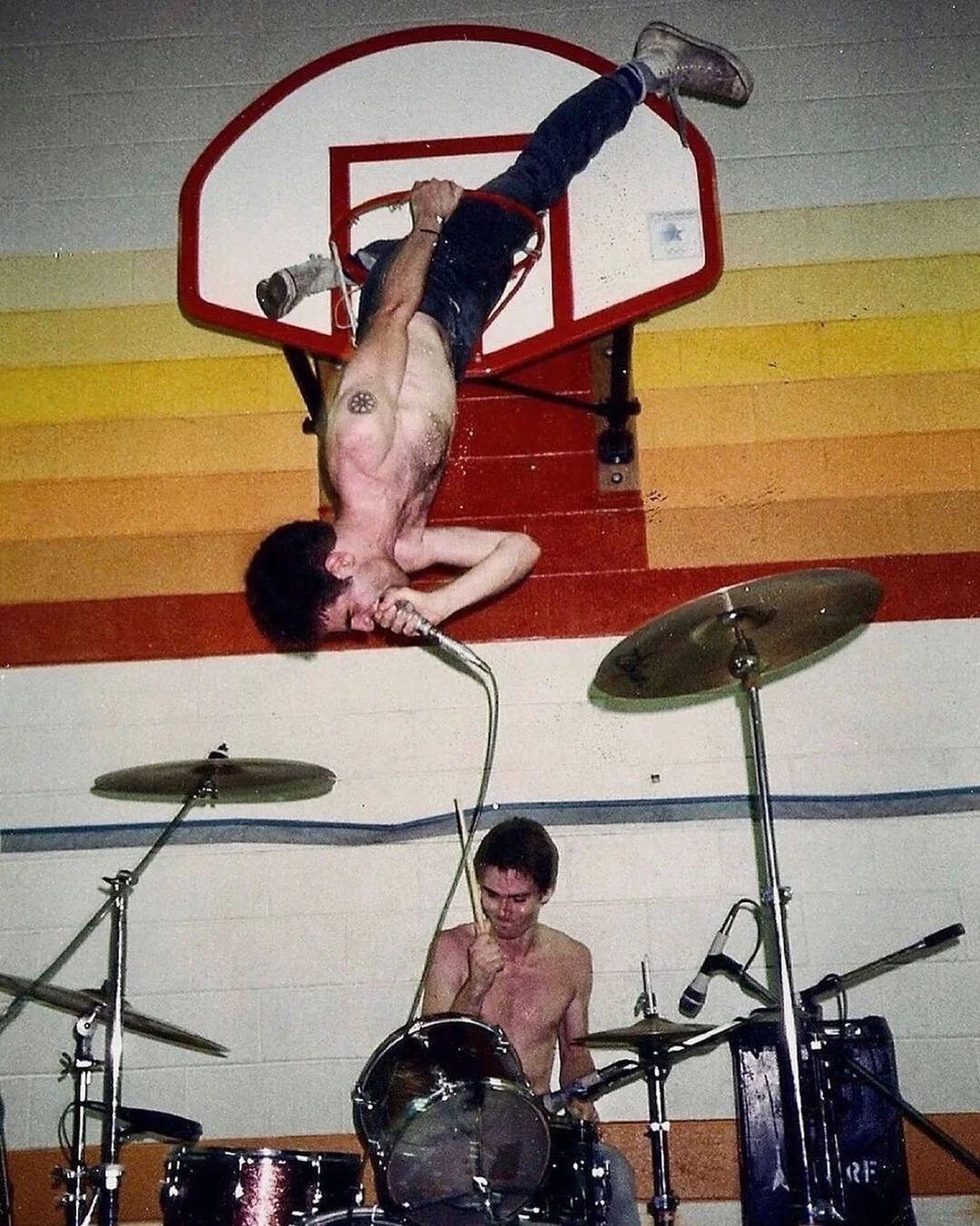
Guy Picciotto & Brendan Canty © anonymous DR
Le 7 août 1988, Fugazi joue à Philadelphie. Guy Picciotto chanteur du groupe punk, se suspend à un panier de basket-ball accroché à un mur de la salle de sport de la YWCA.
—
On August 7, 1988, Fugazi played in Philadelphia. Guy Picciotto, lead singer of the punk band, hung from a basketball hoop attached to a wall in the YWCA gym.
James, nous avons pu discuter, il y a quelques années, à Nevers, lors d’un blind-test. Tu m’avais alors expliqué l’importance des souvenirs dans ta façon de jouer ou d’improviser. Est-ce que cela fonctionne également avec ce groupe ?
James Brandon Lewis : Avec Anthony, nous avons développé une telle complicité au cours des onze dernières années. Nous avons tout de suite su que nous étions faits pour jouer ensemble. Toute cette idée de mémoire s’inscrit donc dans une mémoire à long terme, celle du son, du souvenir. C’est rare de rencontrer quelqu’un avec qui on s’accorde musicalement. Et nous, nous savions cela dès le départ. Et, on avance rapidement. Mais cette question de mémoire revient toujours dans ce groupe. À chaque concert, en fait. Les gens me demandent : « Comment les connaissez-vous ? Vous écoutiez Fugazi ? » Ils oublient que cette musique est une affaire de communauté, pas une question de genre. J’étais destiné à les rencontrer. C’était écrit. Je ne vis pas ma vie en m’appuyant sur la chance ou quelque chose comme ça. J’ai rencontré Anthony à New York. J’ai fait mes études à Washington, pourtant je ne les connaissais pas à l’époque. Tu vois comment ça marche ?
Bien sûr.
James Brandon Lewis : Je ne me souviens pas de cette question précise ni de ce blind-test, mais j’imagine que cela avait sans doute un rapport avec la nostalgie. Quand je joue avec The Messthetics, il arrive souvent que des gens du public disent que ce sont des chansons de Fugazi. En réalité, ce sont des morceaux de Joe et Brendan, qui jouent toutes sortes de musiques depuis l’époque de Fugazi. C’est un beau souvenir. Mais nous ne devons pas rester prisonniers de ce souvenir, nous en faire une prison. Nous devons laisser partir cette mémoire. Bref, c’est une longue réponse à ta question, mais c’est ce que j’avais à dire.
Tu évoques la façon de créer une communauté, y a-t-il des similitudes entre la façon de créer une communauté dans le milieu punk et dans le milieu jazz ?
Joe Lally : C’est assez intéressant, ça. Pendant cette tournée, nous continuons à croiser des gens qui faisaient notre promo à l’époque du punk, et qui maintenant travaillent pour le jazz ou la musique expérimentale… Beaucoup de festivals où nous jouons ne se limitent pas à un seul genre.
Brendan Canty : C’est un grand mélange. Ils s’adressent à des gens qui veulent écouter toutes sortes de musiques. Mais j’étais très… Ça m’a rendu très heureux de recroiser de vieux amis de Fugazi qui continuent à se lancer dans des aventures musicales.
Nous parlons de se souvenir. Anthony, Joe, Brendan, quel est votre premier souvenir lié au jazz ?
Brendan Canty : J’ai grandi avec un père pianiste qui adorait tous les genres musicaux, mais qui jouait surtout du piano stride. Chez nous, on écoutait de la musique en permanence. Très jeune, je l’ai vu jouer avec un petit groupe d’amis. C’était la première fois que j’entendais un batteur en vrai, et j’ai été très impressionné par la taille de la batterie dans la pièce. On aurait dit que quelqu’un avait amené un cheval à la maison. Et je me suis dit : « Oh, c’est mon instrument. » J’ai vraiment adoré ça, dès mon plus jeune âge. Et puis, j’allais voir autant de concerts de jazz que possible, parce qu’il y avait ce club où James allait aussi, et je suis sûr que les deux autres-là aussi, qui s’appelait Blues Alley à Washington. C’était un tout petit club où passaient beaucoup de gens incroyables : Elvin Jones, Wayne Shorter et Tony Williams. J’ai vu beaucoup de musiciens de jazz d’aussi près que tu l’es en ce moment-même. Voilà donc mes premiers souvenirs, grâce à ma famille et à mon père.
Anthony Pirog : Je suppose que ça a toujours été là, mais pour mieux comprendre, il m’a fallu un certain temps pour essayer de déterminer ce que j’aimais dans cette musique, car c’est un genre tellement vaste qu’il est difficile à appréhender. Comme ce n’est certainement pas une chose unique. Il m’a donc fallu du temps pour l’explorer, mais elle était toujours présente à la radio, à Washington DC. Je pouvais donc toujours écouter différents types de jazz. Mais comme ça a toujours été présent, je ne sais pas trop comment ça a commencé pour moi.
Joe Lally : C’était juste là, pour moi aussi. J’essaie de me souvenir de quelque chose, mais je n’y arrive pas. Peut-être en entendant… Je me souviens de certains moments comme la première fois que j’ai entendu le quartet de Coltrane, puis Song X, qui a été très important pour moi. Et puis, comme l’a dit Brendan, ça a été important d’aller au Blues Alley. J’y ai vu tous ceux que je voulais voir.
James, we talked few years ago in Nevers for a blindfold-test. You explained to me then the importance of memories in your way of playing or improvising. Is that working with this band, too ?
James Brandon Lewis : Well, Anthony and me, we’ve had such a rapport over the last 11 years. And we instantly knew that we were supposed to play together, you know. So this whole idea of memory gets into long-term memory, you know, of sound, of remembrance. That’s a rare thing when you meet someone and you can, like, fit within each other’s sounds. And so we knew that. And so then you fast forward. And this matter of memory always comes up in this group. Every show, actually, you know. People are like, well, how do you know them ? Were you listening to Fugazi ? You know, people forget that this music is a community thing. It’s not a genre thing. I was bound to meet them. It was just what’s supposed to happen that way. I don’t live my life off of luck or some kind of thing like that. I met Anthony in New York. I didn’t know them in D.C. I went to school in D.C. I didn’t know them then. See how that works ?
Sure.
James Brandon Lewis : I can’t remember that specific question and this blindfold test, but I think it was probably related to the idea of nostalgia. So when I play with The Messthetics, there’s a lot of times when we play a show, you know, where people would be in the audience and call them Fugazi songs, but see, they’re time-stamping Joe and Brendan. These folks have been playing all kinds of music since then. That’s a beautiful thing. It’s a beautiful memory. But we shouldn’t be beholden to the memory, imprisoned by it. We’ve got to let it go. So anyways, that’s a long answer for your question, but I feel like that’s what I have to say.
You’re talking about the way of making community, were there similarities in the way of making community in punk scene and in jazz scene ?
Joe Lally : You know, it’s been kind of interesting. On this tour, we keep running into people who used to promote us back in the punk rock days, and they’re promoting jazz or experimental or… I mean, a lot of the music festivals that we’re playing today are not one genre.
Brendan Canty : They’re a big mix. They’re for people who want to listen to all sorts of music. But I was very… It made me very happy to run into some old friends from Fugazi who are still working in adventures of music.
We’re talking about memories. Anthony, Joe, Brendan, what is your first memory of jazz ?
Brendan Canty : I grew up, my father was a piano player, and I grew up, he worshipped, I mean, all kinds of music, but he played stride piano, and, you know, we listened to music constantly in my house. And so, from a very young age, I saw him play in a small band in a friend’s house. First time I ever heard a drummer in person, and I was very struck by how big the drums were in a room. It sounded like somebody brought a horse into the house. And I was like : oh, that’s my instrument, you know. Yeah, very early. I really loved it, yeah, from very early times. And then I would just go see as much jazz on my own as I could, because there’s this club that James used to go to as well, and I’m sure these guys too, called Blues Alley in D.C., and it’s a very small club that would got a lot of amazing talent would come through there, and I saw all on my own as I could. We saw Elvin Jones and Wayne Shorter and Tony Williams. I saw a lot of jazz players right up front, as close as to you right now. So that’s my earliest memories, through my family and my father and going to see them in D.C.
Anthony Pirog : I suppose it was always there, but to understand better, it took me a while to try to figure out what I liked in it because it’s such a massive amount of music to try to understand. It is certainly not one thing. So that did take me some time to investigate, but it was always something that was available on radio in Washington, D.C. So I could always hear various types of jazz music. But yeah, it’s always kind of been around, so I don’t know where it began for me.
Joe Lally : Just around. He’s always there. Yeah. I’m trying to remember anything, and I don’t. Maybe hearing… I remember certain moments, but not the very beginning, like hearing the Coltrane quartet the first time, and then hearing Song X was a really important thing for me. And then, like Brendan said, going to Blues Alley. I saw everyone that I wanted to see there.
Si je remonte dans le temps, je suis toujours à l’écoute. Quand j’écoute du vieux punk rock, Flipper et des groupes qui comptaient beaucoup pour moi à l’époque, qui ne signifient peut-être plus rien pour personne aujourd’hui. Mais j’écoute aussi les disques que tout le monde a, les disques qui nous ont amenés cette scène. Aujourd’hui, il y a des groupes comme Turnstile, par exemple, qui enthousiasment clairement tout le monde. C’est incroyable ce qui se passe en ce moment.
Joe Lally, bassiste des Messthetics
« If I go back, I always am listening. If I listen to old punk rock, I’m listening to Flipper and bands that meant a lot to me back then, you know, that maybe doesn’t mean anything to anybody anymore. But I listen to those records everybody has, records that brought them into that scene. But you see it out there now. Like, there’s, you know, bands like Turnstile, those are clearly, like, turning everybody on at the same time. It’s, like, incredible what’s happening right now. »
Joe Lally, Messthetics’ bass player
Ce quartet a-t-il changé le son de l’un de vous quatre dans cette salle ?
Joe Lally : Oh, oui. C’est jouer au tennis avec un grand joueur. On finit par mieux jouer, tu vois ? Il y a plus de dialogue entre moi et ces gars-là, les regarder échanger entre eux sur scène, pour moi, ça a tout changé.
James Brandon Lewis : Je pense qu’on change toujours un peu quand on décide de collaborer avec d’autres personnes. Tu sais, on aborde la musique avec une certaine humilité.
Anthony Pirog : Ce n’est pas une question de compétences, c’est une question de service rendu à la musique. Donc, bien sûr, plus tu joues, plus tu t’améliores. Après tant de refus, il y a un oui qui arrive.
James, tu m’as dit un jour que tu luttais constamment contre la nostalgie. Ce groupe punk t’aide-t-il un peu ? Même question aux punks que vous êtes. Est-ce compliqué de ne ressentir aucune nostalgie pour l’âge d’or de la scène punk, si tant est qu’il ait vraiment pris fin ?
Brendan Canty : Mais nous sommes notre propre âge d’or désormais, non ?
Je suppose que oui.
Joe Lally : Si je remonte dans le temps, je suis toujours à l’écoute. Quand j’écoute du vieux punk rock, Flipper et des groupes qui comptaient beaucoup pour moi à l’époque, qui ne signifient peut-être plus rien pour personne aujourd’hui. Mais j’écoute aussi les disques que tout le monde a, les disques qui nous ont amenés cette scène. Aujourd’hui, il y a des groupes comme Turnstile, par exemple, qui enthousiasment clairement tout le monde. C’est incroyable ce qui se passe en ce moment. Et je pense que ça arrive tout simplement. Le punk, c’est quelque chose qui, pour les jeunes qui se lancent dans la musique, est incroyablement libérateur : pouvoir prendre une guitare, apprendre trois accords ou autre, et partir de là, c’est : « OK, écoute, j’ai une autre idée. » C’est le début. C’est la genèse du parcours créatif personnel de chacun, parce que c’est la chose la plus facile à aborder et que tout le monde s’y met très jeune, tu vois. C’est donc cool de voir mes enfants s’y intéresser et monter leurs propres groupes. Et je n’ai pas besoin d’être dans un groupe punk pour pouvoir faire ça, pour apprécier l’idée que cela les libère.
Ce groupe vous aide donc à lutter contre la nostalgie ?
Anthony Pirog : Oh oui, bien sûr. Nous apportons tous des influences diverses, mais on se rend compte aussi que le combat n’est pas très différent dans d’autres genres musicaux. Les gens viennent aux concerts avec leur énergie, parfois avec une idée précise en tête. On le sent bien. Et nous déconstruisons constamment cela au fil du concert. À la fin, même les puristes du jazz se disent : « oh, ils jouaient quelque chose de vraiment impressionnant. »
Brendan Canty : Ça les force à accepter. Mais, c’est la même chose dans une ambiance punk rock, c’est toujours accueillant, mais il y en a toujours un ou deux pour dire : « C’est un saxophone, qu’est-ce qu’un saxophone vient faire ici ? » Parfois on arrive dans un club de jazz et tous nos sons sont amplifiés et ultracompressés.
J’en suis certain.
James Brandon Lewis : Alors on discute avec les gars du son. Et revient cette idée de nostalgie, les gens veulent ça. Ce qui est très bien, je ne dis pas le contraire, mais dans mon combat personnel, quand je suis chez moi à étudier les grands et l’ampleur des choses, j’imagine différents archétypes de spectateurs. Oui. Tu vois ce que je veux dire ? Il y a le couple qui est là, ils veulent juste que la musique ravive leur amour l’un pour l’autre, ils s’embrassent, et peu importe. Il y a les gens comme nous. Ils nous incarnent quand ils sont dans le public. Ils sont les musiciens, même s’ils ne jouent pas, ils nous regardent et ils vivent leur plus beau rêve. Et puis il y a la personne qui chronomètre, et qui se dit : « Bon, quand est-ce que ça va finir, ce n’est pas ce pour ça que j’ai payé. » Ce sont tous ces différents archétypes que nous effaçons complètement. Parce que nous donnons à chaque membre du public ce qu’il souhaite.
Joe Lally : Il y a des moments où on se dit : « OK, on va vous offrir cette ambiance jazz, vous voyez, où on est…
Brendan Canty : on est sérieux… (rires)
Joe Lally : Et puis on vous donnera ce genre de truc qui vous saute à la gueule. On a un public hétéroclite, mec. On doit séduire les deux publics.
Tu parles d’un coup de poing en pleine figure. Tu pourrais juste jouer des riffs punk.
Joe Lally : Ouais, non, pas comme ça. On verrait trop la lame du couteau. Il faut laisser les gens transpirer lentement… jusqu’à ce qu’ils dégoulinent.
Did this quartet change your own sound for anybody in this room ?
Joe Lally : Oh, yeah. I mean, for me, it’s like being a tennis player and playing with a great tennis player. You just end up playing better, you know, and more, and it’s more, there’s more conversation happening between me and these guys, and then watching them converse with each other on stage, and yeah, no, it’s, for me, it’s totally changed everything.
James Brandon Lewis : I think you always kind of change when you decide to collaborate with people. You know, we come to the music with a certain level of humility.
Anthony Pirog : It’s not about skill sets, it’s about serving the music. So, of course, the more you play, the better you’re going to get. I mean, after so many no’s, there’s a yes.
James you’ve told once you’re constantly fighting against nostalgia. Does this punk band help you a little ? Same question to the punks of you three. Is it a complex thing not to feel any nostalgia for the golden hours of punk scene, if it ever really ends ?
Brendan Canty : But we all have our own personal gold now, don’t we ?
I suppose so.
Joe Lally : If I go back, I always am listening. If I listen to old punk rock, I’m listening to Flipper and bands that meant a lot to me back then, you know, that maybe doesn’t mean anything to anybody anymore. But I listen to those records everybody has, records that brought them into that scene. But you see it out there now. Like, there’s, you know, bands like Turnstile, those are clearly, like, turning everybody on at the same time. It’s, like, incredible what’s happening right now. And I just think it just happens. Punk is something that for young people who are coming into music, it’s incredibly liberating to be able to pick up a guitar, learn three chords or whatever, and then build on that. And then it’s like, okay, look, I have another idea. It’s the start. It’s the, you know, the genesis of everybody’s, you know, personal journey creatively because it’s the easiest thing to get into and everybody gets into it really young, you know. So it’s been cool to watch, like, my kids get interested in it and, you know, having their own bands. And it’s not, I don’t have to be, I don’t have to be in a punk band to be able to do that. To appreciate what it does for people, that it liberates people.
So does this group help each of you to fight against nostalgia ?
Anthony Pirog : Oh yeah, for sure. I mean, I think that we all bring in various influences to the table, and so, but then you begin to realize that the fight is no different for other kind of genres. I think sometimes people come to the concerts with their energy, they come to the concerts with a specific thing that they might have in mind. You can feel that. And we constantly dismantle that as the concert goes on. By the end, even the jazz purists is like, yeah, they were definitely playing something.
Brendan Canty : You know, it forces their hand, it’s the same thing. I mean it’s the same thing with the, I mean we both, we each experience different things at different concerts. You know, sometimes the punk rock vibe, and you know, it’s always a welcoming vibe, but they’re always like, well, it’s a saxophone, what’s a saxophone gonna do here ? So I mean, you know, it’s like vice versa, you know, like sometimes we show up to the jazz venue and then like, all of our sounds are like mic’d and compressed like.
I can tell, James, for sure.
James Brandon Lewis : So then there’s a conversation with the sound people, so. So it’s always this nostalgia thing happening where it’s like, people want this. Which is fine, I’m not, I’m saying in my personal battle when I’m at home studying the greats and studying the magnitude of stuff, there’s different archetypes of audience members in the audience, you know. Yeah. You know what I’m saying ? There’s the couple that shows up, they just want the music to invigorate their love for each other, and you see that, and they’re kissing, whatever. Then there’s the person who is us. They’re embodying us while they’re in the audience. They are the musician, even though they’re not playing, they’re looking at us and they’re like living their best dream. And then there’s the person who’s the timekeeper, and they’re like, all right, when are they gonna get, you know, when is this gonna be over, this is not what I signed up for. So that’s all these different kind of archetypes where it’s like, we obliterate all of that. Because we’ll give you like, all of what each audience member wants.
Joe Lally : We have moments where it’s like, okay, we’ll give you this jazz vibe, you know, where we’re…
Brendan Canty : We are serious.
Joe Lally : And then we’ll give you this like, bam in your face. So it’s been really winning over. We have mixed crowds, man. We’ve been winning over both audiences.
You just talk about a bam in your face. You could just use punk idioms.
Joe Lally : Yeah, nah, not like this. You’ll see the knife. Let them be slowly sweating…Till they drench.
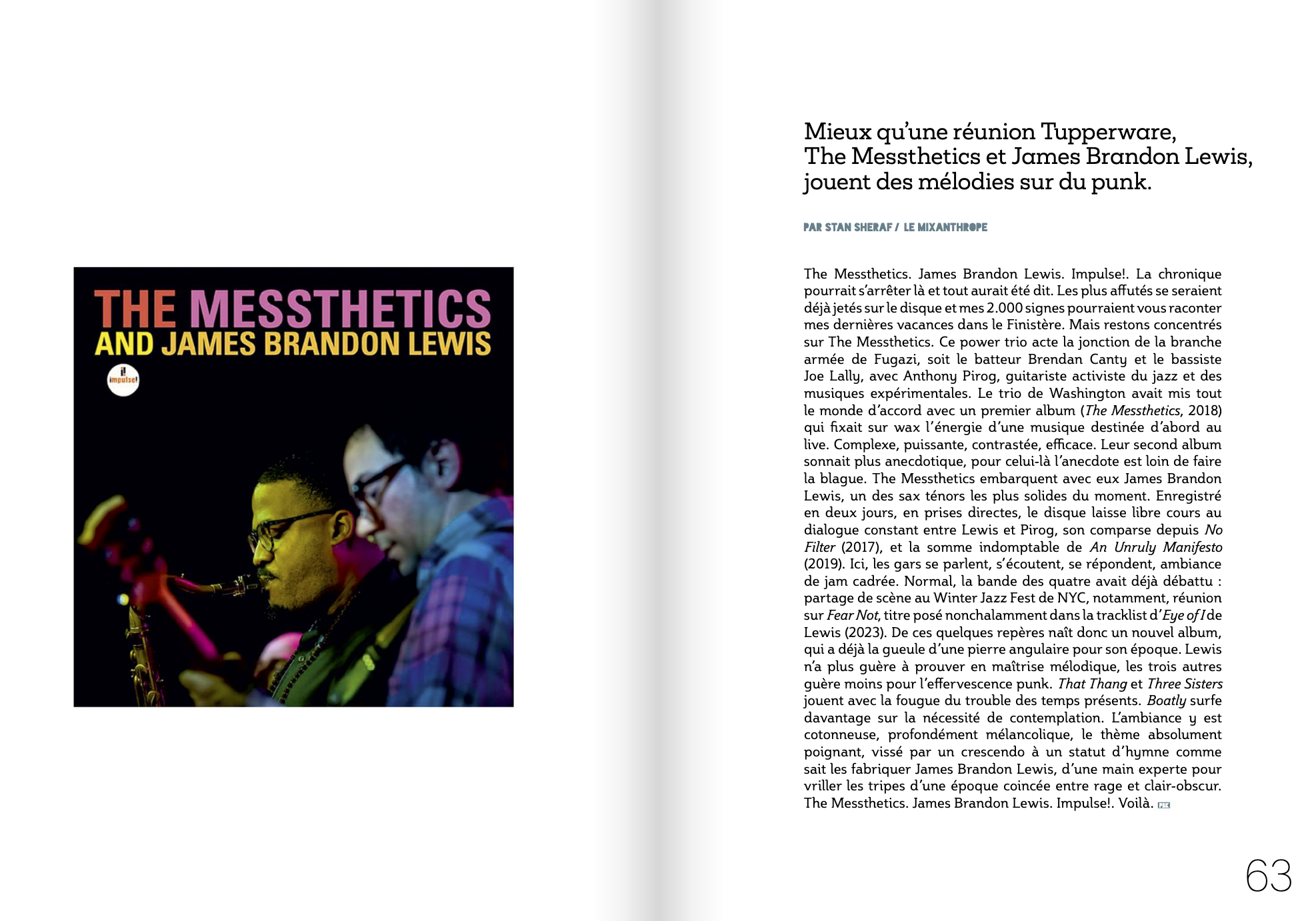
chronique du disque, pointbreak, numéro 3, mars 2024
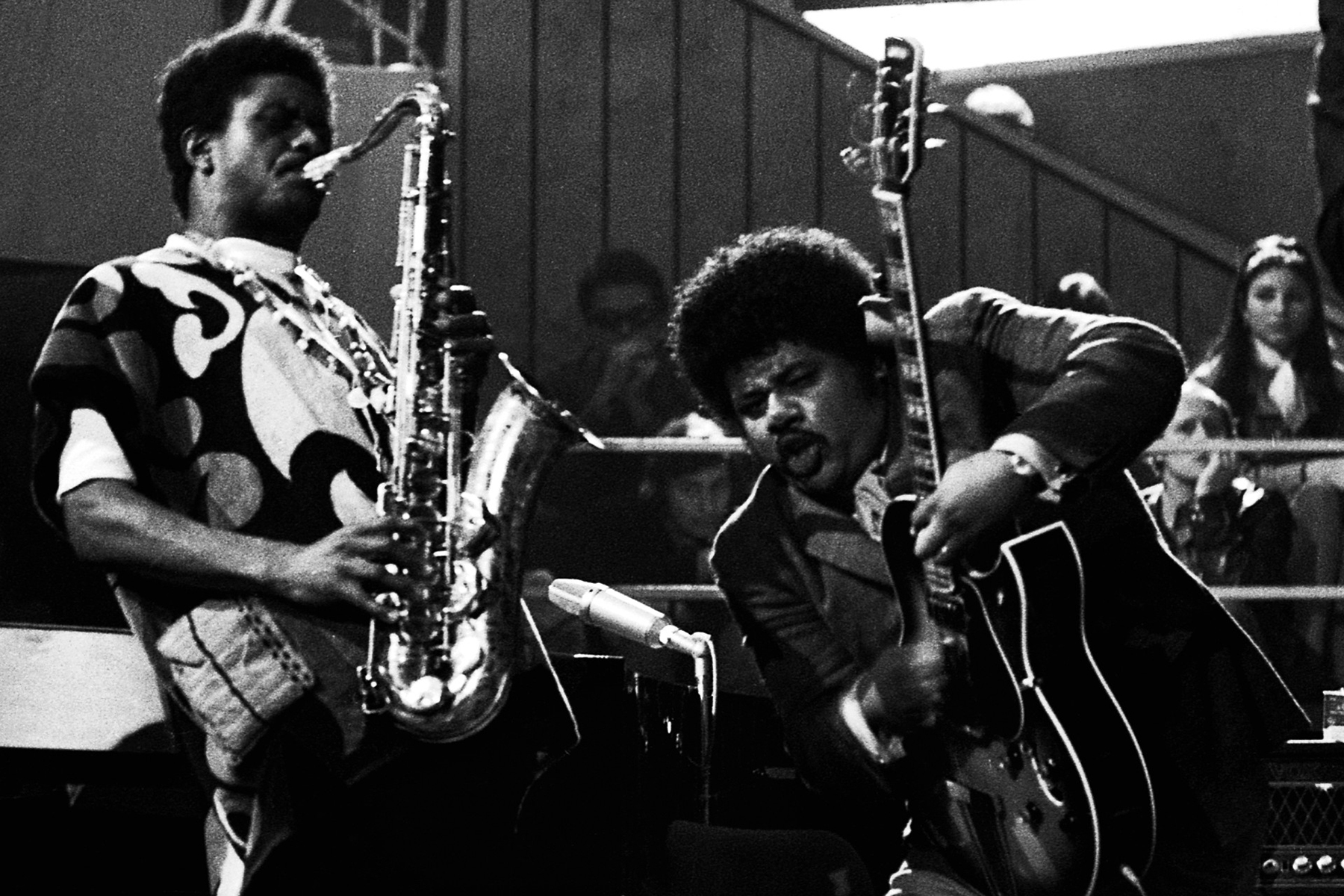
The saxophonist Pharoah Sanders et Sonny Sharrock, on stage, 1968 © Philippe Gras/Le Pictorium/Newscom/MEGA
C’est marrant à propos, en France, il y a une sorte de débat étrange entre les gens qui aiment écouter du jazz assis dans un fauteuil confortable et ceux qui veulent danser devant la scène. Peut-être une autre question française comme avant. Nous sommes très doués pour poser des questions dont personne n’a besoin à part nous. Bref. James, j’ai entendu toi et Anthony jouer Unruly Manifesto au festival de Belfort en 2019.
James Brandon Lewis : En 2019… c’était avec Jaimie alors ?
Exactement Jaimie Branch était là avec Fly Or Die et tout le monde dansait devant la scène. Je ne sais pas s’ils ont fini dégoulinant, mais ils ont commencé à danser.
James Brandon Lewis : C’était un sacré concert… Mmm.
Sans vouloir minimiser l’importance de vos dialogues, faites-moi piger ce qui caractérise la confrontation entre le punk et le jazz. Elle semble provenir d’une énergie similaire, d’une même façon de se battre.
Brendan Canty : Oui, bien sûr.
Anthony Pirog : C’est la même énergie, c’est la même façon de faire.
James Brandon Lewis : Mais attends, au fait, as-tu déjà entendu ce groupe ?
Sur disque, seulement.
James Brandon Lewis : Ce soir, tu vas l’entendre en vrai, non ?
Oui, bien sûr.
James Brandon Lewis : Bien. Alors, garde ta question pour plus tard. À la fin de la soirée, tu reviendras et NOUS te demanderons ce que tu en as pensé, et nous enregistrerons ta réponse sur ta machine.
Parfait, faisons cela.
Anthony Pirog : C’est aussi intéressant ça, parce que parfois, dans le monde punk, il y a une certaine intolérance envers le jeu virtuose, non ?
Joe Lally : oui, c’est vrai.
James Brandon Lewis : Pour moi, c’est important de pouvoir jouer avec des virtuoses, qui puisent aussi clairement dans leur propre vie, leurs propres souvenirs, leur propre passion et leurs propres idées harmoniques. Ce sont des individualités, harmoniques et musicales, complètement différentes. Quand on les regarde jouer, on voit à quel point ils puisent dans leur propre encyclopédie personnelle. Leur musique ne se répète jamais, et c’est vraiment magnifique.
Vous avez également en commun cette facilité à concevoir et à jouer des hymnes.
Brendan Canty : J’ai dû louper un truc. On a déjà joué des hymnes ?
Oui, ce genre de morceau comme Bad Mouth, un truc qu’on peut chanter en fredonnant et qui nous nourrissent d’une certaine énergie.
Joe Lally : Tu veux parler d’une très forte mélodie ? Je crois que nous apportons simplement ce que nous sommes en tant que musiciens. L’idée que tu considères Fugazi comme un groupe punk, ça me va très bien. Mais à l’époque, ce n’était pas le cas. Ça aurait été un peu mieux. Les gens écrivaient que nous jouions du post-hardcore.
Brendan Canty : Oui, c’est vrai…
Joe Lally : C’est horrible d’associer ça à notre musique, comme si on n’avait même pas réussi à tirer du punk de ça… Ça ne semblait n’avoir aucune pureté. Ça ressemblait à un truc horrible, et monstrueux. Alors, j’ai arrêté de prêter attention à ce que les gens écrivaient, parce que ça ne m’inspirait pas à continuer, et, à elle seule, la musique le faisait bien suffisamment. Nous apportons tous notre personnalité, et donc ce que tu entends, c’est peut-être ce dont nous sommes capables, chacun d’entre nous. Mais pour revenir sur la nostalgie, c’est aussi quelque chose à essayer de comprendre. J’écoute beaucoup de vieux trucs, mais peut-être que la nostalgie, ce serait de vouloir rester avec ces trucs. J’aime comprendre ce qui s’est passé, ce qui s’est créé et qui m’influence pour aller de l’avant. Mais, je ne pense pas à vivre là-bas, à Nostalgia. Nous ne voulons pas être piégés là-bas.
Pour moi, la musique punk est surtout un son qui pense. Votre énergie musicale peut nous faire réfléchir, mais après les disques ou les concerts. Elle peut éveiller en nous certaines pensées ou façons d’être. Nous n’avons pas besoin de savoir ce que vous pensez, vous, avant de vous écouter. En revanche, nous pouvons comprendre beaucoup de choses après vous avoir entendus.
Joe Lally : Il est évident que la musique communique avec les gens, qu’il y ait des paroles ou non. J’ai pu entendre de la musique instrumentale qui m’a transporté et m’a parlé à des niveaux que je ne comprends pas totalement. Mais c’est quelque chose que je crois à propos de la musique et de la transmission se produit uniquement quand tout le monde est attentif sur le moment. On est alors dans une sorte de méditation.
James Brandon Lewis : Je pense que tout se passe à des niveaux beaucoup plus profonds que ce que nous pouvons simplement expliquer avec des mots.
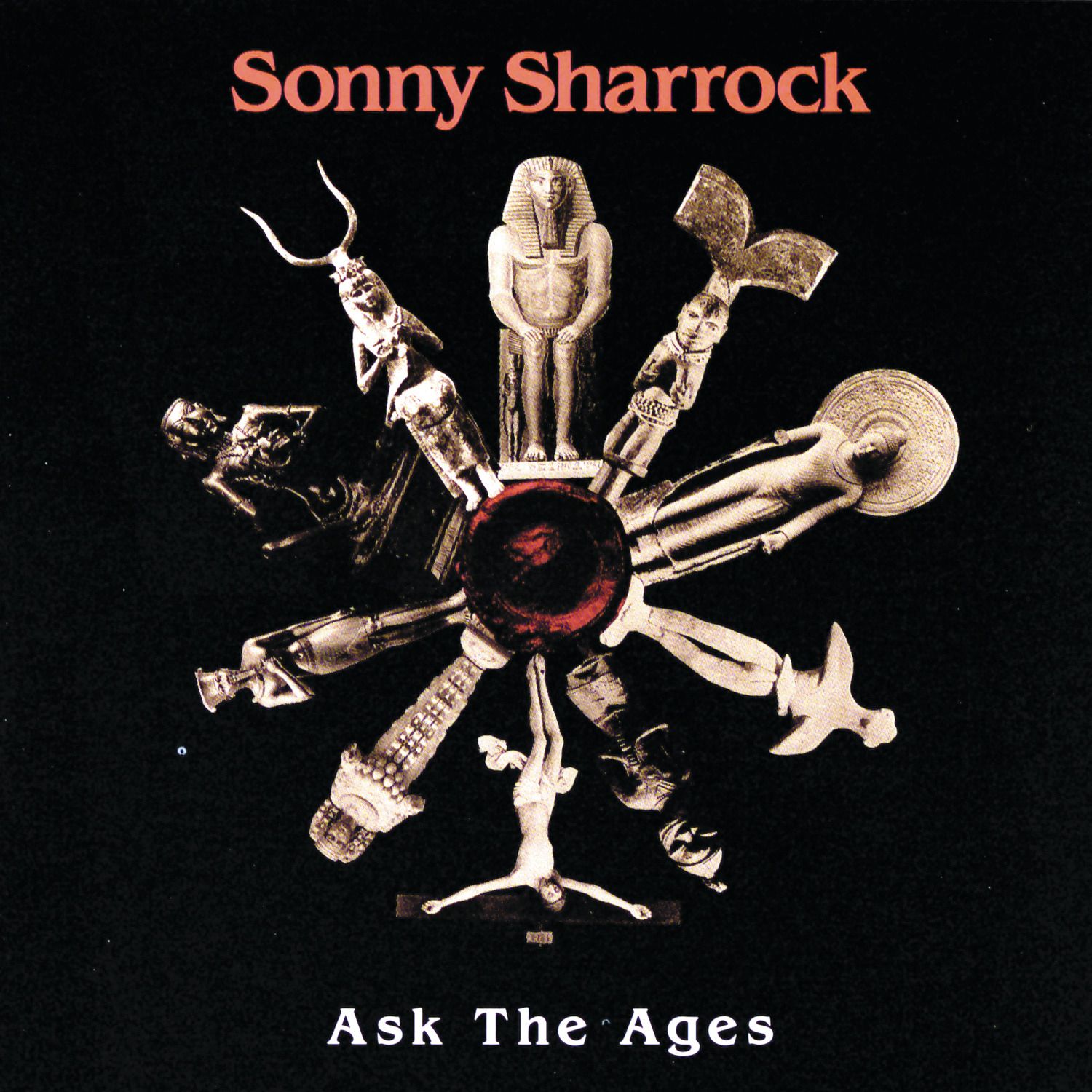
À propos de ce qui se passe… Vous jouerez ensemble l’hiver prochain au festival Sons d’hiver et vous revisiterez un disque de Sonny Sharrock. Comment cette idée est-elle née ?
Joe Lally : À cause de quelqu’un qui organisait une série de concerts dans un club de Philadelphie.
James Brandon Lewis : Mais Ask The Ages était sans aucun doute l’un de mes disques préférés, ainsi que celui d’Anthony. Brendan et Joe, vous l’avez déjà joué.
Joe Lally : Le premier concert que j’ai donné en tant que leader d’un groupe était une reprise de ce disque. Joe et moi avons commencé à nous connecter autour de cet album, Once Upon a Time est sur le premier disque des Messthetics. Ask The Ages, pour moi, c’est le mélange parfait entre une composition qui permet tout type d’improvisation et une production excellente grâce aux overdubs. Tout est basé sur des accords barrés, des harmonies triadiques, la façon dont les musiciens de cet album soutiennent les idées de Sonny est très inspirante. C’était donc une bonne chose d’interpréter ces chansons, mais je ne voulais pas du défi de les jouer exactement comme elles avaient été enregistrées. Je ne pouvais pas jouer comme Charnett Moffet.
Brendan Canty : Perso, je ne sais pas jouer comme Elvin Jones.
James Brandon Lewis : Et je ne suis certainement pas Pharoah Sanders, mais je peux faire du bon travail.
C’est-à-dire ?
James Brandon Lewis : Anthony et moi, nous avons beaucoup parlé de ce disque. C’est un classique. Beaucoup de gens le connaissent. L’équipe de Sons d’hiver a vu la promo pour ce concert. Nous étions tous pourtant d’accord pour dire que ce serait une expérience unique. Mais comme la musique était excellente et que c’était une belle soirée…
In France there’s some kind of strange debate between people who like to hear jazz sitting in a comfortable chair and people that want to dance in front of the scene. Maybe another french questions as before. We are very good at asking questions that maybe nobody needs but us. Anyway. James, I’ve heard you and Anthony playing the ‘UnRuly Manifesto’ playing in Belfort festival about 2019.
James Brandon Lewis : 2019… it was with Jamie then ?
Exactly. Jamie Branch was there with Fly Or Die and every people danced before the stage. I don’t know if they finished sweating but they tried to dance.
James Brandon Lewis : that was some gig… Mmm.
Without wanting to downplay the importance of playing together, I’m simply trying to understand what characterizes the confrontation between punk music and jazz. It seems to stem from a similar energy, the same way of fighting.
Brendan Canty : Right, of course.
Anthony Pirog : It’s the same energy, it’s the same way.
James Brandon Lewis : But Wait… Have you heard this band ?
On records, only.
James Brandon Lewis : Tonight you’re going to hear it, right?… Yeah. You should save that question. At the end of the night, you come with that one question back, and then WE ask you what you thought, and we put that on your mic.
Let’s do this.
Anthony Pirog : It’s interesting, though, because sometimes in the punk world there’s a bigotry against virtuosic playing, right ?
Joe Lally : somtimes, right.
James Bradon Lewis:And so to me, this is important to me to be able to play for people and have two people who are virtuosic but are also so clearly pulling from their own lives and their own memories and their own passion and their own harmonic ideas, right ? They’re individuals, like harmonically and musically, completely different. You see when you watch them play how much they’re drawing from how much of their own personal encyclopedia of music they’re drawing from. Of their music, of their own music that they pull from, it doesn’t repeat itself and it’s a really beautiful thing. I’m always super proud to put this it in front of people because then the people who might think, oh, there’s just noodling. Actually, they’re just noodling. They’ve actually something to say, which is really a beautiful thing.
You also have in common this ease of conceiving and playing anthems.
Brendan Canty : I’m missing that. Did we play anthems ?
Yeah, those things as ‘Bad Mouth’ we can sing by humming and that feed us with some kind of energy.
Joe Lally : You mean like a strong melody ? I think we’re just bringing who we are as musicians. The idea that you look back at Fugazi as a punk band, is fine. But at the time it was not. It would have felt a little bit better People write that we were we were post-hardcore.
Brendan Canty : Yeah, right…
Joe Lally : That’s a horrible sounding thing, to have attached to your music, like we didn’t even get punk out of it, you know what I mean ? It didn’t even sound like there was a purity to it. It sounded like a horrible, you know, monster-ish thing that was, well that’s when I stopped paying attention to what anybody was going to write, because it didn’t inspire me to keep going, and I was inspired enough by the music. But I would say that we’re all bringing who we are, and so what you’re hearing may be that yeah, those are things that we are capable of from any one of the four of us. But, you know, nostalgia is something else to try to understand, too, because nostalgia, I listen to a lot of old music, but maybe nostalgia is to want to remain in it, is to want, is to call up and be specifically that. But, you know, I like to understand what happened, and it influences me to move forward. I don’t think about living there. In Nostalgia. We don’t want to be trapped there.
Punk music is, to me, a sound that thinks. Your playing energy can make us think, but later. And it can awaken in us some thoughts, some way of being. We don’t have to know what you think before listening to you. But we can understand many things after hearing you.
Joe Lally : It’s obvious that music communicates to people whether there’s words in the music or not. I know I’ve seen instrumental music that has transported me and spoke to me on levels that I don’t totally understand. But that’s something that I believe about music and the transmission of information that happens when everyone brings their attention and is in the moment of music, which I think is a meditation where you allow that possibility
James Brandon Lewis : I think everything’s occurring on levels that are much deeper than we can just simply state about what’s happening.
About what’s happening… You’ll play together next winter in Sons d’hiver festival and you’re about to revisit tracks from a Sonny Sharrock record. How did it come ?
Joe Lally : We were asked by a particular person putting on a series of shows in a club in Philadelphia.
James Brandon Lewis : But ‘Ask The Ages’ was certainly a favorite of mine and a favorite of Anthony’s. Brendan and Joe, you’ve already performed it.
Joe Lally : That’s the first show I ever did as a band leader was covering that record. And then Joe and I started bonding over that record and the last song on our, we covered the last song on our first record, Once Upon a Time. So, yeah, it’s been an important record for us because it’s the perfect, to me, the perfect blend of composition that allows for any type of improvisation and the production is great because there’s overdubs. It’s all based on bar chord, triadic harmony, and, I mean, the way that the players on this record support Sonny’s ideas are just, like, it’s very inspiring to hear. So it’s been good to interpret those songs, but it’s been a challenge to not play them exactly as they were been recorded. I couldn’t possibly play the way Charnett Moffet plays.
Brendan Canty : I can’t play like Elvin Jones.
James Brandon Lewis : And I’m definitely not Pharoah Sanders., but I can do a good job.
What do you mean ?
James Brandon Lewis : Anthony and I talked a lot about this record, too. That’s a classic one. A lot of people know it record. So, people who are working at Sons d’hiver saw the advertisement for this ? Altought, we had all agreed that that was going to be a one-time thing. But, you know, the music felt good. That was a beautiful night.
retour
au top